• Home
  • About
  • Defense Systems
  • Manufacturer
  • Comparisons
  • Compare 
  • Tools
TheDefenseWatch.com
  • Aerospace & Aviation
  • Military & Ordnance
  • Naval & Maritime
  • Cyber & Space Defense
  • Policy & Strategy
  • Global News
  • Tools Library
    • Smart Calculator
    • Drone Flight Time Calculator
    • Drone Range Calculator
    • Counter-Drone Jammer Effective Range Calculator
    • Counter-Battery Radar Detection Calculator
    • Artillery Fire Correction Calculator
    • Thermal Camera Detection Range Calculator
    • Missile Range & Time-of-Flight Calculator
    • Radar Detection Range Calculator
    • FPV Strike Drone Payload vs Range Calculator
    • Loitering Munition Endurance Calculator
    • Sniper Ballistic Drop & Windage Calculator
    • Bullet Drop Calculator
    • U.S. Army Combat Fitness Test (ACFT) Calculator
    • Military Pension Calculator
    • Military Retirement Calculator
    • Military Pension Calculator
    • Large Number Calculator
Font ResizerAa

TheDefenseWatch.com

The Defense Watch | U.S. & Global Defense News, Analysis & Military Updates

Search
  • Home
  • About
  • Defense Systems
  • Manufacturer
  • Comparisons
  • Compare 
  • Tools

Stay Updated

Get the latest update

Subscribe

Explore

  • Drone
  • Fighter Jets & Military Aircraft
  • Hypersonic Weapons
  • Aircraft Carriers
  • Strategic History & Missions
  • Tools Library
Home » U.S. Air Force Tests Minuteman III ICBM With Multiple Reentry Vehicles In Routine Launch From Vandenberg
Conventional Weapons & ModernizationMilitary & Ordnance

U.S. Air Force Tests Minuteman III ICBM With Multiple Reentry Vehicles In Routine Launch From Vandenberg

Daniel Mercer / Defense & Aerospace Analyst
Last updated: September 12, 2026 8:10 pm
Daniel Mercer / Defense & Aerospace Analyst
Share
6 Min Read
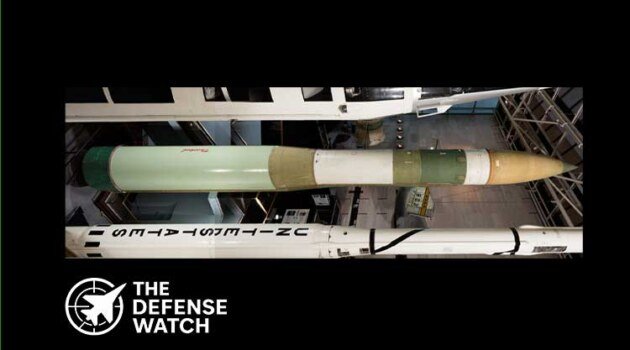
Minuteman III ICBM test
Image: U.S. Air Force.
SHARE
■ KEY FACTS AT A GLANCE
  • ► U.S. Air Force launched an unarmed Minuteman III ICBM from Vandenberg Space Force Base.
  • ► Test vehicle carried multiple reentry vehicles to validate system performance and accuracy.
  • ► Launch conducted by Air Force Global Strike Command as part of routine operational testing.
  • ► Data supports ongoing modernization and transition to the Sentinel ICBM program.
  • ► Officials stress the test was pre planned and not linked to current geopolitical tensions.

U.S. Air Force Tests Minuteman III ICBM With Multiple Reentry Vehicles

The U.S. Air Force tested a Minuteman III ICBM with multiple reentry vehicles in a routine launch from Vandenberg Space Force Base, reaffirming the operational readiness of the nation’s land based nuclear deterrent.

Contents
  • U.S. Air Force Tests Minuteman III ICBM With Multiple Reentry Vehicles
    • Validating The Minuteman III ICBM
    • Routine Testing, Strategic Message
    • Bridging To The Sentinel Era
    • The Role Of Vandenberg
    • Sustaining The Nuclear Triad
    • Strategic Context
(adsbygoogle = window.adsbygoogle || []).push({});

The unarmed missile lifted off under the supervision of Air Force Global Strike Command. According to official statements, the test was scheduled years in advance and forms part of a regular series of evaluations designed to ensure the reliability, accuracy, and effectiveness of the intercontinental ballistic missile force.

Validating The Minuteman III ICBM

The LGM-30G Minuteman III remains the backbone of the U.S. ground based nuclear triad. First deployed in the 1970s, the missile has undergone multiple life extension programs to sustain its viability well beyond its original service life.

In this latest Minuteman III ICBM test, the Air Force equipped the missile with multiple reentry vehicles. While the United States currently deploys single warhead configurations in line with arms control commitments, test configurations often include multiple reentry vehicles to validate performance parameters, targeting accuracy, and system resilience.

- Advertisement -
  • Minuteman III LGM 30 ICBM Missile

    Minuteman III LGM 30 ICBM Missile

    • Guidance System: Inertial navigation with astro correction
    • Maximum Speed: Mach 23 plus
    • Launch Compatibility: Hardened underground silo
    • Warhead Technology: Nuclear reentry vehicle
    • View Details →
    8.3

    The reentry vehicles traveled roughly 4,200 miles to a designated impact area at the Ronald Reagan Ballistic Missile Defense Test Site in the Marshall Islands, a standard endpoint for such launches. Officials said telemetry and tracking data will be analyzed to assess system performance.

    Routine Testing, Strategic Message

    Air Force officials emphasized that the Minuteman III ICBM test was routine and not a response to any specific global event. The United States typically conducts several ICBM test launches each year to demonstrate the reliability of its strategic forces.

    That said, such launches inevitably carry strategic weight. In an era marked by renewed competition among nuclear armed states, routine validation of long range missile systems reinforces deterrence credibility. Adversaries track these events closely, even when the Pentagon underscores their planned and predictable nature.

    The transparency surrounding these tests also reflects U.S. adherence to existing arms control notification protocols, including advance notifications under bilateral agreements where applicable.

    Bridging To The Sentinel Era

    The Minuteman III ICBM test comes as the Air Force moves toward replacing the aging system with the LGM-35A Sentinel, previously known as the Ground Based Strategic Deterrent.

    Sentinel is expected to assume the land based leg of the nuclear triad in the coming decade. However, delays and cost growth in the modernization program have increased scrutiny in Washington. Until Sentinel reaches full operational capability, the Minuteman III fleet must remain fully mission capable.

    Each successful Minuteman III ICBM test therefore carries dual importance. It confirms present readiness while buying time for the transition to a next generation system.

    The Role Of Vandenberg

    Vandenberg Space Force Base serves as the primary West Coast site for U.S. ICBM test launches. Its geographic position allows safe downrange trajectories over the Pacific Ocean toward established impact zones.

    (adsbygoogle = window.adsbygoogle || []).push({});

    Test missiles launched from Vandenberg are drawn from operational silos at bases across the continental United States. They are transported to California, reassembled, and prepared for flight in coordination with operational crews. This process ensures that the test reflects real world readiness conditions.

    Sustaining The Nuclear Triad

    The Minuteman III ICBM test also highlights the enduring importance of the land based leg of the nuclear triad, alongside ballistic missile submarines and strategic bombers. Defense planners argue that silo based ICBMs complicate adversary attack planning by presenting hundreds of hardened targets across multiple states.

    • LGM-30G Minuteman III ICBM

      LGM-30G Minuteman III ICBM

      • Guidance System: Advanced inertial navigation with modernized upgrades
      • Maximum Speed: Mach 23+
      • Launch Compatibility: Underground silo launch
      • Warhead Technology: Nuclear MIRV (limited to single RV per treaty)
      • View Details →
      8.0

      Critics, however, continue to debate the long term cost and strategic logic of maintaining a large ICBM force. That policy debate remains active on Capitol Hill, particularly as modernization programs across all three legs of the triad move forward simultaneously.

      For now, the operational focus remains clear. Routine testing, data analysis, and incremental upgrades aim to keep the Minuteman III force credible until its eventual retirement.

      Strategic Context

      The Minuteman III ICBM test underscores a broader reality. Even as emerging domains such as cyber and space gain attention, nuclear deterrence remains central to U.S. national defense strategy.

      (adsbygoogle = window.adsbygoogle || []).push({});

      By conducting transparent, scheduled launches, the Air Force seeks to demonstrate both capability and restraint. The missile was unarmed. The flight was planned. The data gathered will inform sustainment and modernization efforts.

      In strategic terms, consistency matters. Reliability underpins deterrence. Each successful Minuteman III ICBM test reinforces that message.

TAGGED:Air Force Global Strike CommandICBM Test LaunchMinuteman IIINuclear DeterrenceVandenberg Space Force Base
Share This Article
Facebook Copy Link Print
ByDaniel Mercer / Defense & Aerospace Analyst
Follow:
Daniel Mercer is a defense and aerospace analyst at TheDefenseWatch.com covering military aviation, aerospace technology, unmanned systems, air warfare, and defense procurement. His reporting uses official documents, government and military statements, company announcements, and other public sources.
Leave a Comment

Leave a Reply Cancel reply

Your email address will not be published. Required fields are marked *

Latest Defense Systems

  • B-25 Mitchell Bomber B-25 Mitchell Bomber
  • F-100 Super Sabre F-100 Super Sabre
  • North American F-86 Sabre North American F-86 Sabre
  • North American XB-70 Valkyrie North American XB-70 Valkyrie
  • Northrop YF-23 Fighter Northrop YF-23 Fighter
  • P-51 Mustang Fighter Aircraft P-51 Mustang Fighter Aircraft
  • Rafale F5 Fighter Rafale F5 Fighter
  • Tomahawk Block V Missile Tomahawk Block V Missile
  • Tomahawk Block IV Missile Tomahawk Block IV Missile

Recent Compares

  • J-10C vs JF-17 Thunder: Which Fighter Is More Capable? J-10C vs JF-17 Thunder: Which Fighter Is More Capable? View Comparison →
  • Tejas vs Gripen: Key Differences and Capabilities Tejas vs Gripen: Key Differences and Capabilities View Comparison →
  • Tejas vs MiG-21 Bison: How India Replaced Its Iconic Supersonic Fighter Tejas vs MiG-21 Bison: How India Replaced Its Iconic Supersonic Fighter View Comparison →
  • F-35 vs F-16: Stealth, Sensors and Combat Roles F-35 vs F-16: Stealth, Sensors and Combat Roles View Comparison →
  • Tejas Fighter Jet vs F-16 Fighting Falcon: Capability Compared Tejas Fighter Jet vs F-16 Fighting Falcon: Capability Compared View Comparison →
  • Rafale Fighter Jet vs F-16 Fighting Falcon : Which Fighter Has the Edge? Rafale Fighter Jet vs F-16 Fighting Falcon : Which Fighter Has the Edge? View Comparison →
  • Su-57 Fighter Jet vs J-20 Fighter Jet: Stealth and Air Combat Compared Su-57 Fighter Jet vs J-20 Fighter Jet: Stealth and Air Combat Compared View Comparison →
  • Mirage 2000 vs Tejas Mk1A: Legacy Combat Power vs Indigenous Modernization Mirage 2000 vs Tejas Mk1A: Legacy Combat Power vs Indigenous Modernization View Comparison →
  • Rafale Fighter Jet vs F-22 Raptor: Which Air Dominance Fighter Has the Edge? Rafale Fighter Jet vs F-22 Raptor: Which Air Dominance Fighter Has the Edge? View Comparison →
  • Tejas Fighter Jet vs. Rafale Fighter Jet: India’s Indigenous Fighter Meets France’s Proven Multirole Combat Aircraft Tejas Fighter Jet vs. Rafale Fighter Jet: India’s Indigenous Fighter Meets France’s Proven Multirole Combat Aircraft View Comparison →

Recent Posts

  • Pratt & Whitney Begins $100 Million Polish Expansion for F-35 Engine Parts
  • Northrop Grumman Wins $43.9 Million Contract for Trident II Rocket Motor Facilities
  • Ukraine Drone Strikes Disrupt Russian Data Centers, Raising Questions About AI Infrastructure Security
  • Lockheed Martin Wins $114.6 Million Contract to Redesign F-35 Navigation Systems
  • Project Agincourt Pushes Pentagon to Speed Up Autonomous Weapons Fielding

You Might Also Like

Shahed-136 drone
Conventional Weapons & ModernizationMilitary & Ordnance

Pentagon Activates First U.S. One-Way Attack Drone Squadron Based on Shahed-136 – LUCAS Drones Deployed to Middle East

September 8, 2026
Artist rendering of the U.S. Army XM30 mechanized infantry combat vehicle replacing the Bradley fighting vehicle.
Military & OrdnanceTanks & Armored Vehicles

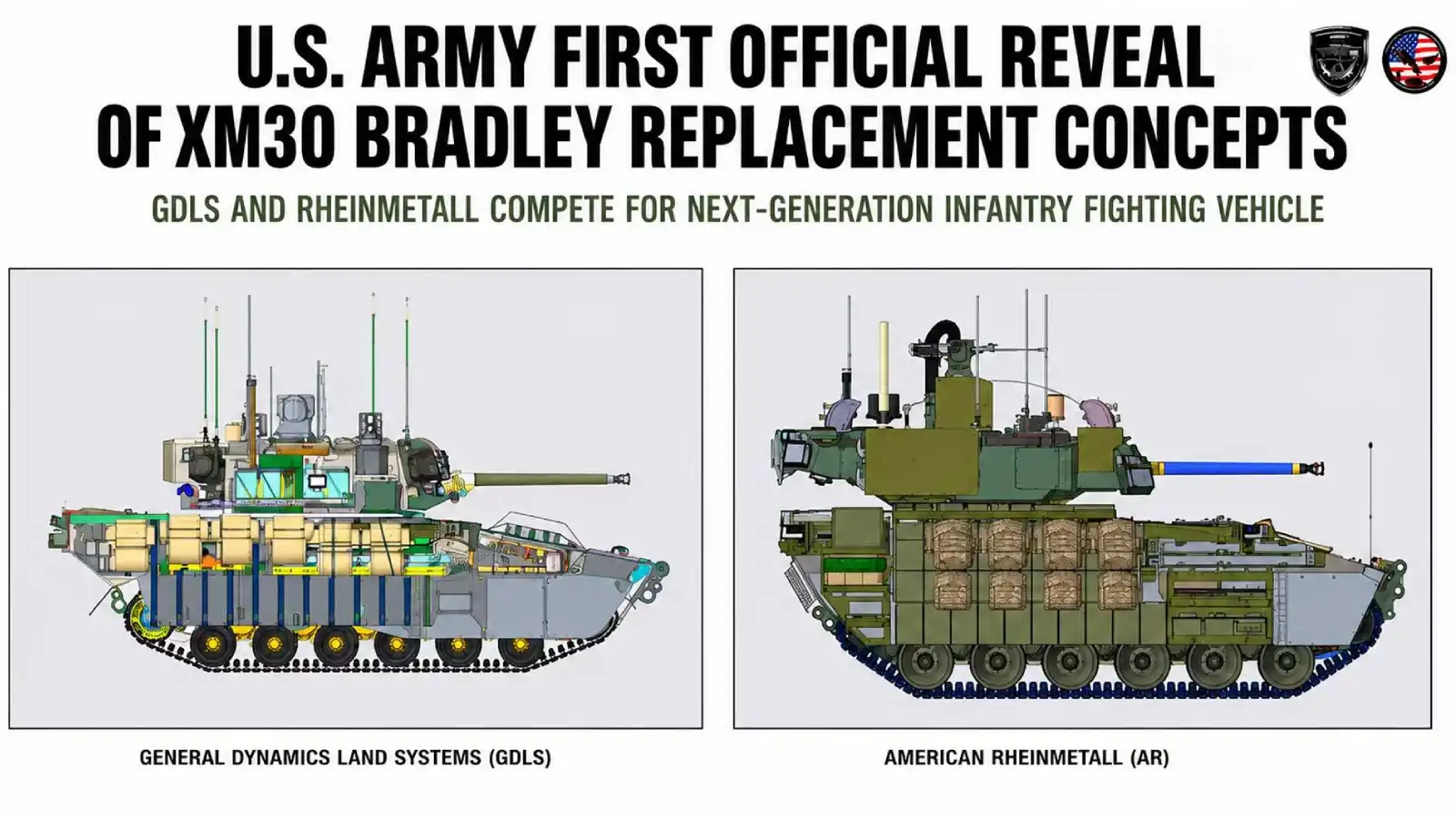
U.S. Army Unveils XM30 AI Infantry Fighting Vehicle Designs To Replace Bradley

September 12, 2026
IRIS T SLX air defense
Artillery & Missile SystemsMilitary & Ordnance

IRIS T SLX Aims To Close Gap With Patriot As Europe Expands Air Defense Capabilities

September 8, 2026
Northrop Grumman PGK E5
Military & Ordnance

Northrop Grumman PGK E5 Adds Anti-Jamming to 155mm Artillery

October 3, 2026

Logo

Copyright © 2026 TheDefenseWatch.com

Helpful Links

  • Home
  • About Us
  • Privacy Policy
  • Terms of Use / Disclaimer
  • U.S. Privacy Notice – CCPA Compliance

Defense Systems

  • Defense Systems
  • Comparisons 
  • Manufacturer
  • Tactical Calculators

Popuplar

Which 5 Air Forces Possess the Costliest Fighter Jet Fleets in the World
Evolving Strategic Value: Carrier Strike Groups in the Indo-Pacific’s Future Security Architecture
Autonomous Weapon Systems Spark U.S. Ethics Debate Amid Rapid Military AI Integration

We report on developments involving military forces, governments, defense companies, research organizations, and security institutions around the world. 

Welcome Back!

Sign in to your account

Username or Email Address
Password

Lost your password?